Christmas Time
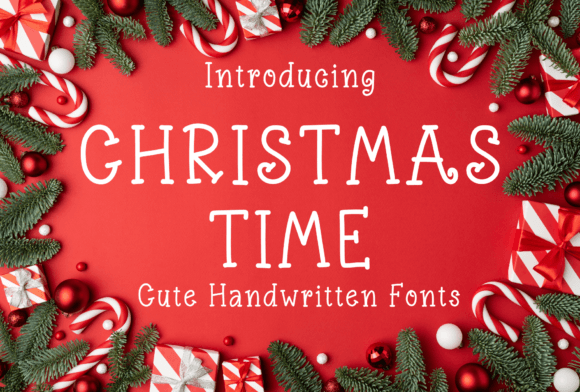
Christmas Time isn’t just a name—it’s a feeling captured in ink. This whimsical, handwritten font dances with playful strokes, soft curves, and gentle irregularities that mimic the warmth of a pen gliding across handmade wrapping paper or a holiday card signed with care. It doesn’t shout; it smiles. It doesn’t command attention—it invites it, quietly, like the first snowfall or the scent of cinnamon on a quiet December morning.
What makes Christmas Time stand out isn’t just its charm—it’s how effortlessly it fits into real life. You won’t find it in corporate boardroom decks or legal disclaimers (and that’s intentional). Instead, you’ll spot it where people pause to connect: on a small-batch candle label tucked into a holiday market stall, in the header of a teacher’s printable “Elf on the Shelf” activity sheet, or looping across the front of a bakery’s limited-edition gingerbread cookie box.
Where Christmas Time Fits Naturally
Think about your last holiday season—not the idealized version from ads, but the actual one. The rushed-but-meaningful moments: printing last-minute gift tags at 10 p.m. on December 23rd, designing a digital invitation for your family’s virtual cookie exchange, or updating your Etsy shop banner for the festive season. That’s where Christmas Time earns its place—not as decoration, but as a tool that reduces friction and adds authenticity.
For small business owners, it’s a quick way to signal seasonal warmth without redesigning an entire brand. A coffee roaster might swap their usual sans-serif logo lockup for Christmas Time in their Instagram Stories countdown to “Peppermint Mocha Launch Day.” No rebranding. Just resonance.
Educators use it to soften learning materials during the hectic final weeks before break. A third-grade teacher might apply Christmas Time to the title of a printable multiplication worksheet themed around “Reindeer Relay Races”—making math feel less like work and more like play. Students notice the difference. So do parents scrolling through class newsletters.
Freelance designers often keep Christmas Time in a “go-to holiday folder” alongside high-res pine branch vectors and muted red/green palettes. When a client asks for “something cozy but not cutesy” for their boutique’s holiday e-blast, this font delivers tone in one click—no rounds of revisions asking for “more joy, less glitter.”
Real Situations, Real Decisions
You don’t need a design degree to know when Christmas Time is right—and when it’s not. Here’s how people actually decide:
- Use it when the goal is intimacy: Handwritten fonts imply human presence. If your project needs to feel personal—a thank-you note printed on kraft paper, a wedding welcome sign for a December ceremony, or a custom playlist cover for a friend’s holiday road trip—Christmas Time bridges the digital-to-tactile gap.
- Avoid it when clarity is non-negotiable: Fine print on a product warranty? Instructions for assembling a toy? Legal terms in a holiday promotion? Skip it. Its charm lives in medium-to-large sizes where letterforms have room to breathe. At 10 pt in body text, legibility drops—not because it’s poorly designed, but because it’s intentionally expressive, not utilitarian.
- Pair it thoughtfully: It sings next to clean, neutral typefaces (think Montserrat or Lora), not competing ones. Try Christmas Time for headlines and section titles, then switch to a readable serif or sans-serif for paragraphs. That contrast gives warmth *and* structure.
Practical Considerations Before You Download or License
Not all Christmas Time files are equal—and not every version suits every need. Here’s what users actually check before committing:
- Licensing scope: Is it free for personal use only? Does the commercial license cover digital products you sell (like Canva templates or printable planners)? Some versions allow social media use but restrict resale—critical for Etsy sellers bundling fonts with SVG cut files.
- Character set: Does it include accented characters if you serve bilingual families or international customers? What about numerals, punctuation, and OpenType features like stylistic alternates? One designer learned the hard way that her “Merry & Bright” tag design needed a special ampersand—and the basic version didn’t include it.
- File format compatibility: Most versions come in .OTF and .TTF, but if you’re using Affinity Designer or Cricut Design Space, double-check whether the font loads smoothly. Some users report better rendering in vector-based tools when using OTF over TTF.
Why It Works Beyond Aesthetics
There’s psychology at play—and it’s subtle but real. Studies on typography and emotional response show that rounded, uneven, hand-drawn forms trigger associations with approachability, nostalgia, and safety. That’s why a pediatrician’s office might use Christmas Time on their holiday newsletter—it eases anxiety. Why a nonprofit sending year-end impact reports chooses it for donor appreciation headers—it signals gratitude, not transaction.
It also solves a quiet problem: visual fatigue. After months of crisp, algorithm-optimized UIs and sterile marketing emails, Christmas Time feels like stepping into a well-loved living room. That contrast isn’t accidental—it’s restorative.
Small Touches, Big Impact
You don’t need to overhaul your whole design system to benefit. Try these low-effort, high-return uses:
- Add Christmas Time to the “From” line in your holiday email signature—just your name, in warm script. It takes 30 seconds and makes replies feel more personal.
- Use it for chapter titles in a self-published holiday short story or recipe ebook. Readers report “feeling the season” before reading the first sentence.
- Stencil it onto burlap for a rustic photo booth backdrop at your company’s ugly sweater party. The imperfections become part of the charm—not a flaw to fix.
In the end, Christmas Time isn’t about perfection. It’s about presence. It’s the font you choose when you want your audience to feel seen—not impressed, not dazzled, but gently reminded of something familiar and kind. Whether you’re labeling homemade jam for neighbors, drafting a heartfelt message to your remote team, or designing a keepsake ornament for a newborn’s first Christmas, it’s there—not as a trend, but as a quiet, consistent companion to the season’s most meaningful moments.