Aladya: Elegant Handwritten Font for Modern Projects
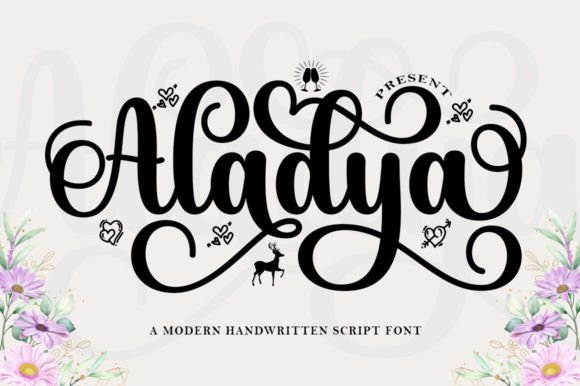
Aladya is a beautifully crafted handwritten font that feels both timeless and refreshingly current. If you’ve ever admired the grace of calligraphy but wanted something easier to use in digital design—without sacrificing personality or polish—you’ll appreciate how Aladya bridges that gap. It’s not just another script font; it’s thoughtfully designed with real-world versatility in mind.
What Makes Aladya Stand Out
At its core, Aladya captures the warmth and rhythm of hand-drawn lettering. Its letters flow naturally, with subtle variations in baseline height that mimic the organic movement of ink on paper. You’ll notice smooth curves, balanced spacing, and carefully shaped terminals—details that add sophistication without feeling stiff or overworked.
One of Aladya’s quiet strengths is its rich set of alternate glyphs. These aren’t just decorative extras—they give you flexibility to fine-tune tone and style. A wedding invitation might use delicate swashes for elegance, while a café menu could lean into bolder, friendlier forms. And because Aladya maintains consistent weight and proportion across characters, it scales beautifully—from tiny social media bios to large-format signage.
Why People Choose Aladya
Whether you’re launching a small business, designing classroom materials, or updating your personal blog, Aladya helps convey intention and care. It signals authenticity and attention to detail—qualities that resonate deeply with today’s audiences. Unlike generic sans-serifs or overly formal serifs, Aladya invites connection. It says, “This was made with thought—not just clicked together.”
Beginners love Aladya because it works well out of the box: no steep learning curve, no need for advanced OpenType features to get great results. Professionals appreciate how effortlessly it elevates branding—think logo lockups, packaging labels, or email headers—without requiring custom illustration. Educators use it for handouts and bulletin boards to make learning feel more inviting. Freelancers choose it when clients want something distinctive yet professional for presentations or pitch decks.
Real-World Uses That Just Work
Here’s where Aladya shines in everyday contexts:
- Small business branding: A boutique owner used Aladya for her shop’s name tag, website banner, and product labels—creating visual harmony across online and physical spaces.
- Social media graphics: Bloggers pair Aladya headlines with clean sans-serif body text for Instagram quote posts, striking a balance between approachability and polish.
- Invitations & stationery: Wedding designers layer Aladya with light textures and soft colors to evoke romance without looking dated.
- Educational printables: Teachers apply Aladya to reading worksheets or classroom posters—it’s legible at size, yet feels more engaging than standard fonts.
- Digital products: Course creators use Aladya for section headers in PDF workbooks, giving self-paced learning materials a personal, crafted touch.
You don’t need graphic design experience to benefit from Aladya. Most modern tools—Canva, Adobe Express, Figma, even Google Docs (with compatible install)—support it right away. Try pairing it with a neutral sans-serif like Inter or Lato for contrast that breathes and balances.
Things to Keep in Mind Before Using Aladya
Like any expressive font, Aladya works best when matched to the right context. It’s ideal for short bursts of text—headlines, logos, quotes, titles—but less suited for long paragraphs or dense interfaces where readability becomes a priority. Always test how it appears on mobile screens; some swash variants may tighten up unexpectedly at smaller sizes.
If you're using Aladya commercially—say, on merchandise or client projects—double-check the license terms. Most versions include broad usage rights, but extended licenses may be needed for things like app interfaces or broadcast use. Also, remember that true handwritten fonts rely on context: Aladya gains impact when paired with thoughtful layout, whitespace, and color—not just dropped into a template.
Another practical note: while Aladya includes many alternates and ligatures, you don’t have to use them all. Start simple. Pick one or two stylistic sets that match your project’s mood—then build from there. Overcomplicating can dilute its charm.
A Font That Grows With Your Ideas
What makes Aladya especially valuable is how it adapts as your needs evolve. A hobbyist making handmade greeting cards today might later use it to brand an Etsy shop. A freelancer building their portfolio can start with Aladya for presentation slides—and keep using it consistently as their brand matures. It doesn’t shout for attention; instead, it supports your voice, quietly reinforcing trust and craftsmanship.
Its calligraphic roots give it authority, while its contemporary rhythm keeps it feeling relevant—not nostalgic or fussy. That duality is rare. You won’t mistake Aladya for anything else, yet it never overwhelms the message. It serves the content, not the other way around.
Getting Started Is Simple
No special software is required to begin. Download Aladya, install it on your system, and try it in a tool you already use. Write a short headline. Adjust tracking slightly if needed. See how it feels next to your usual body font. Notice how even small changes—like switching from a default capital “A” to an alternate version—can shift the entire impression.
Don’t aim for perfection on the first try. Play. Rotate through alternates. Print a test line and hold it up to natural light. Fonts are tools—and Aladya is one that rewards curiosity and care.
Whether you're sketching ideas on paper or refining a final mockup, Aladya brings a sense of intention to every project. It reminds us that typography isn’t just about letters—it’s about how people feel when they see your work. And with Aladya, that feeling is almost always warm, confident, and quietly unforgettable.